
Direct Answer
Drone spraying is often faster, safer, and more efficient for larger or time-sensitive operations, while manual spraying can still suit small farms, low-frequency spraying, and limited-budget situations.
Spraying pesticides, fertilizers, and nutrients is one of the most important operations in farming. The effectiveness of spraying directly affects crop health, pest control, and overall yield.
For years, farmers have relied on manual spraying methods. However, increasing labor costs, labor shortages, and advancements in agriculture technology have introduced a new option: drone spraying.
This guide compares manual spraying and drone spraying across cost, safety, efficiency, and performance.
Understanding Manual Spraying
Manual spraying generally involves labor-intensive field application using common equipment.
- Knapsack sprayers
- Motorized sprayers
- Tractor-mounted systems
- Manual field application
It remains common among small farms and traditional operations.
Understanding Drone Spraying
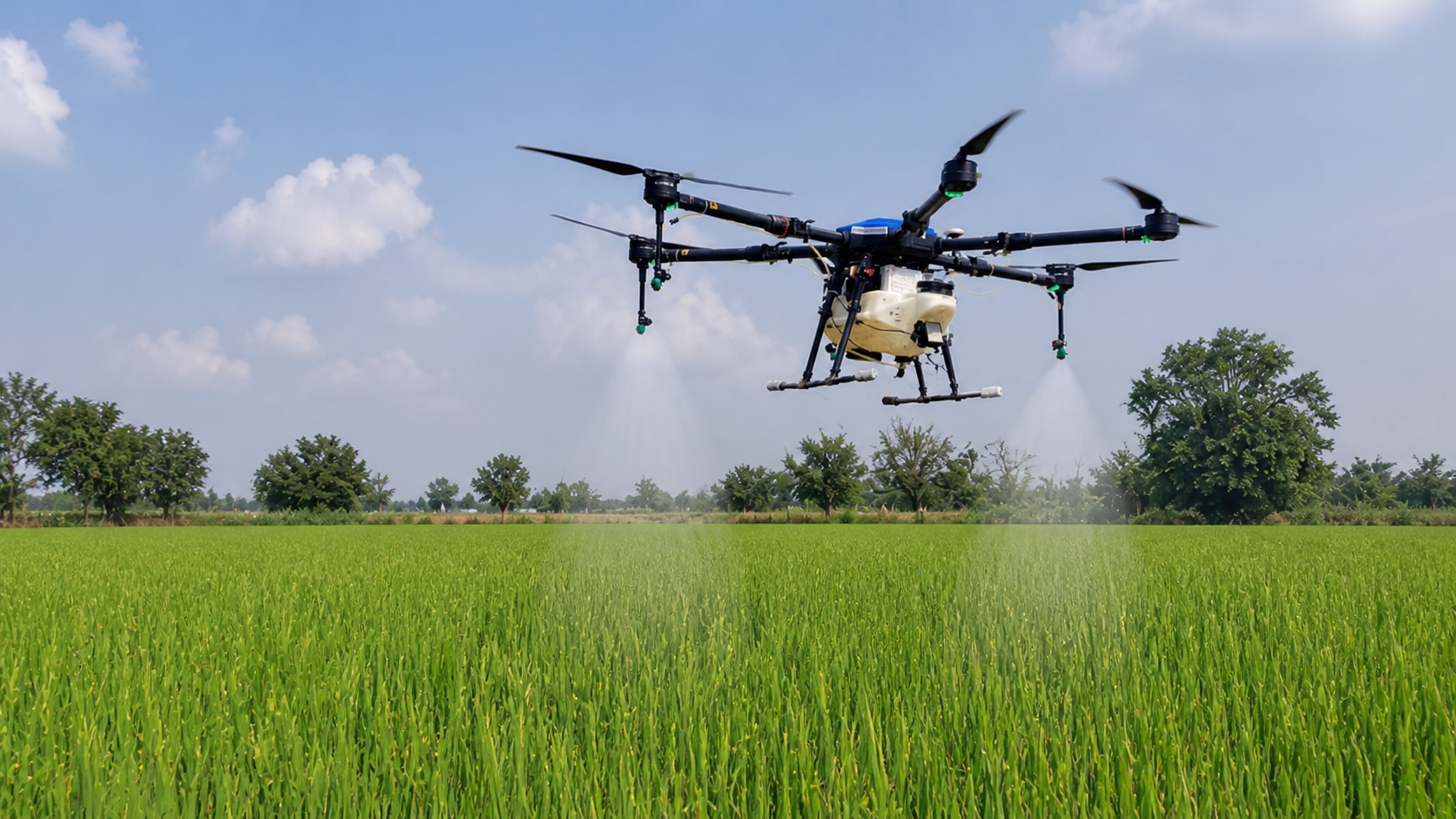
Drone spraying uses unmanned aerial systems equipped with spray tanks, pumps, nozzles, and flight planning software.
The drone follows planned routes and sprays chemicals over crops with minimal physical effort.
1. Cost Comparison: Which Is More Affordable?
Many farmers assume manual spraying is always cheaper. The reality is more complex.
Manual Spraying Costs Include
Labor charges, fuel, time loss, repeated applications, and protective equipment.
Drone Spraying Costs Include
Service charges per acre, equipment investment for ownership, batteries, and maintenance.
| Factor | Manual Spraying | Drone Spraying |
|---|---|---|
| Initial Cost | Lower | Higher |
| Labor Dependency | High | Lower |
| Operational Speed | Slower | Faster |
| Long-Term Efficiency | Variable | Often improved |
| Large Acreage Economics | Less efficient | Better |
For small farms, manual methods may remain economical. For larger acreage, drones often improve operational efficiency.
2. Safety: Protecting Farmers Matters
Safety is one of the biggest differences.
Manual Spraying Risks
Operators may experience direct exposure to pesticides, herbicides, and chemical vapors. Repeated exposure increases concern over time.
Drone Spraying Safety Advantage
Operators maintain distance during application, reducing direct chemical contact and exposure risk.
3. Efficiency and Speed
Speed affects crop protection. Delayed spraying may reduce effectiveness during pest outbreaks, disease spread, and seasonal windows.
Manual spraying speed depends on worker availability, physical effort, and terrain. Drones can complete operations much faster, especially on larger farms.
4. Uniformity of Spraying
Uniform application affects treatment effectiveness. Manual coverage may vary due to human fatigue, inconsistent movement, and uneven application.
Drone systems aim for more consistent coverage, planned spray paths, and better repeatability.
5. Labor Requirement
Labor availability is becoming a major challenge in agriculture. This is especially important during high-demand seasons.
| Factor | Manual | Drone |
|---|---|---|
| Number of Workers | Higher | Lower |
| Dependence on Labor | High | Reduced |
| Peak Season Challenges | Common | Less affected |
6. Water Usage
Many drone spraying systems operate using lower water volumes compared to traditional methods. This can reduce transport requirements and improve operational efficiency.
7. Suitability for Difficult Terrain
Certain farms are difficult to access manually, including wet fields, dense crops, uneven land, and tall crops. Drone systems improve accessibility.
8. Productivity Over Large Acreage
For large-scale operations, manual methods may face delays, worker limitations, and extended spraying duration. Drone systems often improve productivity.
Complete Comparison: Manual vs Drone Spraying
| Parameter | Manual Spraying | Drone Spraying |
|---|---|---|
| Initial Cost | Lower | Higher |
| Labor Requirement | High | Lower |
| Chemical Exposure | Higher | Reduced |
| Speed | Slower | Faster |
| Uniformity | Variable | More consistent |
| Water Usage | Higher | Lower |
| Large Acreage Suitability | Moderate | Better |
| Accessibility | Limited | Improved |
Neither method is universally best; suitability depends on requirements.
When Manual Spraying May Be Better
- Small farms
- Low-frequency spraying
- Limited budget operations
When Drone Spraying May Be Better
- Large farms
- Commercial spraying services
- Frequent applications
- Time-sensitive operations
- Labor shortage situations
Frequently Asked Questions
Is drone spraying cheaper?
For large-scale operations, efficiency improvements may offset higher initial costs.
Is manual spraying still useful?
Yes. Many farms continue using manual methods effectively.
Which method is safer?
Drone spraying generally reduces direct chemical exposure.
Which method is faster?
Drone spraying is typically faster for larger areas.
Final Thoughts
Manual spraying and drone spraying each have practical uses. The right choice depends on farm size, crop type, budget, labor availability, and operational goals.
For many farmers, drone spraying is not replacing traditional methods entirely. It is becoming an additional tool to improve efficiency and reduce labor challenges.
The future of agriculture may involve combining experience from traditional farming with modern precision technologies rather than choosing only one approach.
Want to explore drone spraying solutions or understand which method suits your farm?