
Direct Answer
Drone training is useful for students, farmers, entrepreneurs, working professionals, and businesses that want to operate drones safely for agriculture, mapping, inspections, and commercial services. The best training programs combine theory with hands-on flying.
The drone industry in India is expanding quickly. What was once limited to photography and defense applications has now entered agriculture, surveying, inspections, logistics, construction, and disaster management.
With increasing demand for skilled drone operators, many students, farmers, entrepreneurs, and working professionals are asking: Is drone training worth it? and How do I become a certified drone pilot in Bangalore?
Why Is Drone Training Becoming Important?
Drones are being used across multiple industries, and trained operators are becoming more valuable as adoption increases.
- Agriculture and spraying operations
- Survey and mapping
- Construction monitoring
- Infrastructure inspection
- Mining
- Disaster response
- Real estate
- Photography and videography
- Industrial inspection
Who Should Join Drone Training?
Students
Useful for students interested in aerospace, mechanical engineering, agriculture, GIS, robotics, or emerging technologies.
Entrepreneurs
Helpful for people planning drone spraying, survey, inspection, or mapping businesses.
Farmers
Useful for agriculture drone operations, spraying workflows, and precision farming adoption.
Working Professionals
Supports career transition, additional technical skills, and industry exposure.
Business Owners
Useful for organizations planning to integrate drones into operations.
Eligibility for Drone Training in India
Eligibility requirements vary by training category and certification type. Common requirements may include:
- Minimum age criteria
- Valid identification documents
- Educational qualification requirements where applicable
- Basic understanding of English or local language instructions
- Medical fitness standards where applicable
What Will You Learn During Drone Training?
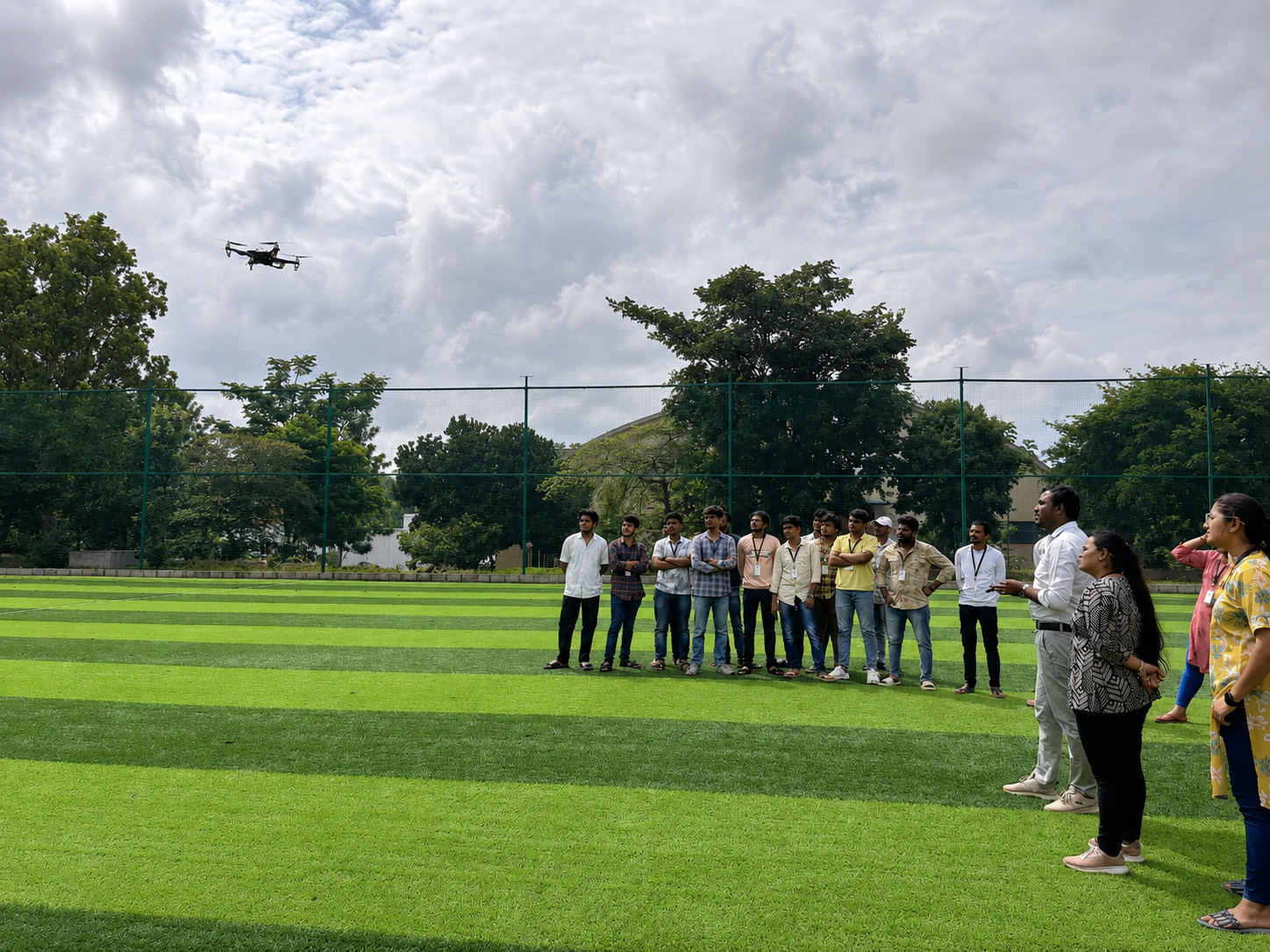
Training generally includes both theory and practical flying. Practical exposure often determines training quality more than classroom hours alone.
- Drone basicsDrone components, flight systems, battery systems, and communication systems.
- Airspace and regulationsOperational rules, compliance basics, and safe flying practices.
- Flight planningHow to prepare missions safely and efficiently.
- Weather assessmentUnderstanding wind, rain, visibility, and operational limits.
- Practical flying sessionsTakeoff, landing, maneuvering, and mission execution.
- Emergency handlingHow to respond during unexpected situations.
- Maintenance basicsRoutine inspection, battery care, and basic upkeep.
- Agriculture drone operationsSpray planning, calibration, tank management, and safety procedures in specialized programs.
How Long Does Drone Training Take?
Training duration depends on certification type and specialization. Programs may include short awareness workshops, skill development programs, professional pilot training, or specialized agriculture drone training.
Duration varies by institution and course objectives, so learners should compare syllabus, practical hours, and post-training support.
Is Certification Necessary?
Certification requirements depend on intended operations. Commercial activities may require compliance with applicable regulations.
Before joining any program, verify course recognition, certification validity, training structure, and practical exposure provided.
Questions to Ask Before Choosing a Drone Training Institute
- Practical flyingHow much hands-on flying exposure is provided?
- Instructor experienceAre instructors experienced in real operations?
- Drone categoriesWhich drone types and categories are used during training?
- Agriculture modulesDoes training include agriculture drones and spraying workflows?
- SupportIs post-training guidance or career support available?
- ProjectsAre industry projects or field exposure included?
Career Opportunities After Drone Training
Drone Pilot
Operate drones for agriculture, inspection, mapping, or commercial missions.
Agriculture Drone Operator
Support precision farming and spraying operations.
Survey Technician
Assist land, infrastructure, and mapping projects.
Inspection Services
Work across power lines, solar plants, industrial facilities, and assets.
Drone Entrepreneur
Start independent spraying, mapping, or inspection services.
Maintenance Technician
Support equipment upkeep, diagnostics, and repairs.
Drone Training vs Learning from YouTube
Online videos can help with theory, but professional flying requires hands-on experience, safety procedures, equipment handling, and real-world operations. Practical training remains important for confidence and safe execution.
Frequently Asked Questions
Can beginners join drone training?
Yes. Many programs start from foundational concepts.
Is drone training useful for agriculture?
Yes. Agriculture drones are becoming increasingly important in precision farming.
How long does it take to learn drone operation?
Learning speed varies by individual and training quality.
Can training help start a drone business?
Many entrepreneurs join training before entering drone services.
Final Thoughts
Drone technology is moving beyond being a niche skill. Across agriculture, infrastructure, surveying, and inspections, trained operators are becoming increasingly valuable.
Choosing the right drone training program is less about duration and more about practical exposure, instructor quality, support, and real-world learning opportunities.
Looking for drone training, agriculture drone learning, or industry exposure in Bangalore?